Circo
Smiljan Radić
Calle Mayor
2026
During the years of the dictatorship, the Chilean artist Eugenio Dittborn smuggled large folded paintings inside grey envelopes to different parts of the world: his Airmail Paintings. Among all possible architectures, few accept with such ease the condition of being folded, transported and reinstalled within a few hours. The circus —in its smaller scale— is one of the paradigmatic forms of this economy of movement.
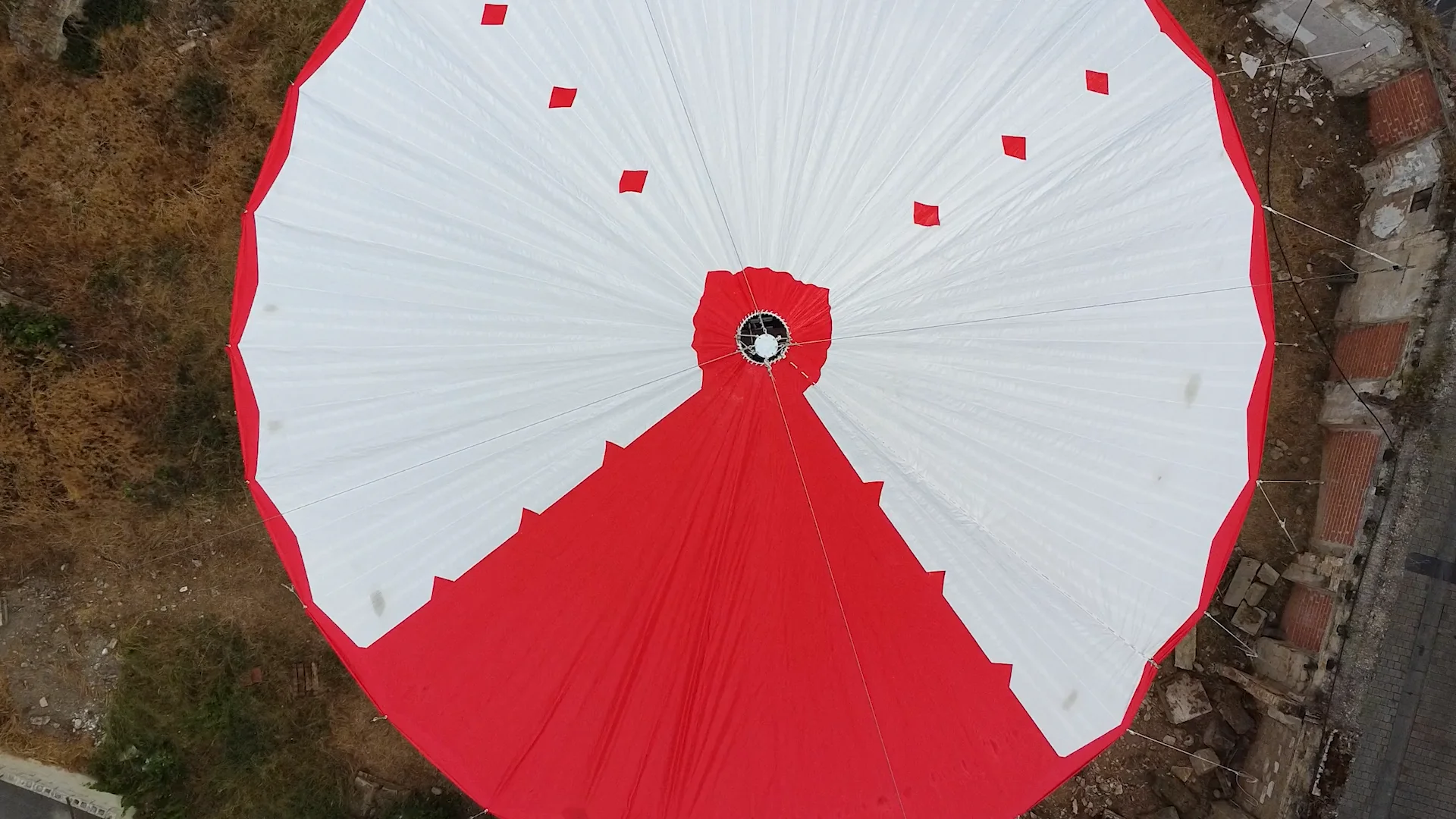
Every summer, poor circuses travel along the central coast of Chile. They settle for three or four days on neighbourhood football pitches or on any available empty plot —soft, open, communal spaces— and leave without a trace. They are built from a cheap, precarious plastic sheeting, the same used for the rubble-collection bags known as maxi sacks: it cannot withstand the solar radiation that passes through it and fades on every journey; its durability depends solely on the devoted repairs of its owners. During its brief existence, light filters in and inflates a vibrant, fragile interior full of industrial colours: reds, yellows, whites, light blues, oranges and greens.
The circus, as both event and structure, has been the seed of avant-garde theatre: the Dadaist shock, the Constructivists’ scenographic stripping-bare, the Situationist New Babylon, that city which never fully settles onto the ground. It is the shadow of every in-situ ephemeral architecture that seeks to build, fragilely, an interior full of air: light, joyful, primitive and economical, perhaps the finest example of instantaneous space imaginable today.
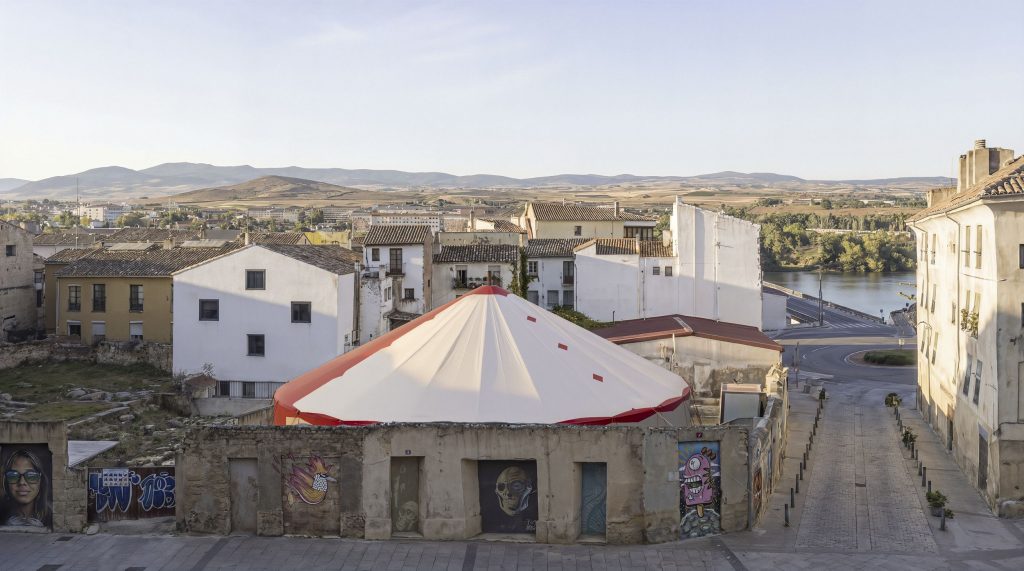
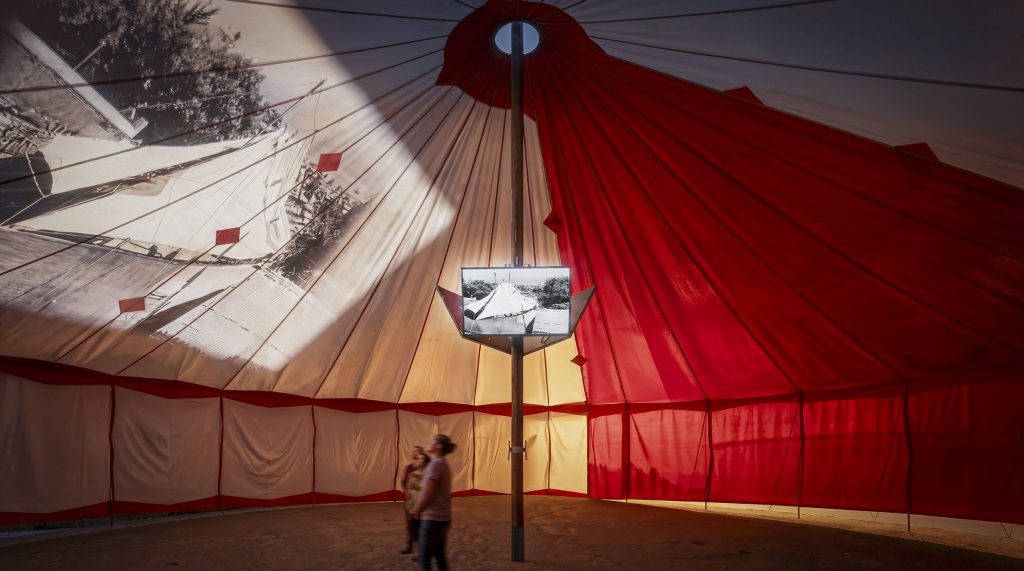
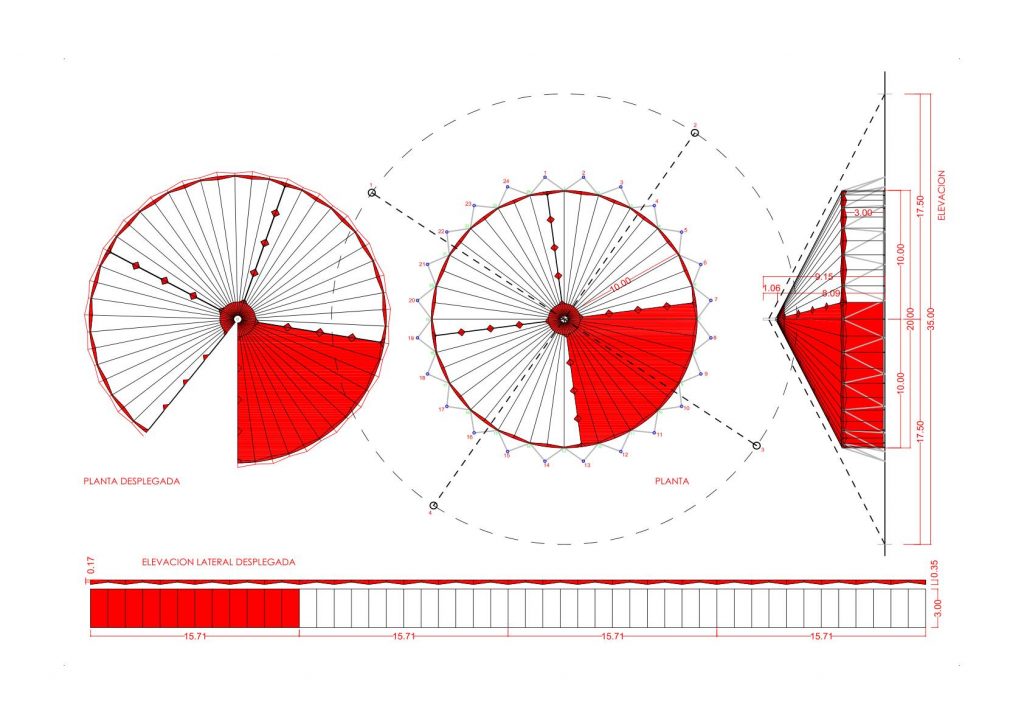
To relocate and colour a twenty-metre-diameter Chilean poor circus and install it, by Spanish hands, on a soft available plot in Logroño is the project for Concéntrico 2026. In its communal interior, six screens lie on the ground —like communal iPads— accompanied by folding circus chairs scattered at random, like flies; on them, out of sync, plays Le petit chapiteau (Joris Ivens, 1963), filmed in Valparaíso: seven minutes of a permanent enchantment. And, despite itself, the circus could also be ideally transparent.
El título toma prestada una expresión vinculada al imaginario del medievalista Georges Duby: esos temblores de superficie que remitían a los miedos, presagios y expectativas del año mil. Aquí, sin embargo, el temblor no anuncia ninguna catástrofe, sino una forma de mirar. La tierra vibra por acumulación: estratos, erosiones, cultivos, agua, trabajo y tiempo.
Una estructura ligera, casi una malla estratigráfica, se posa entre los renques de la viña. Su geometría fija momentáneamente la acción del surco y proyecta sobre el suelo unas nuevas coordenadas. La intervención se inserta en la lógica de los surcos mediante una ligera excavación que genera un ámbito protegido y cercano al terreno; sobre él, una viga prefabricada de gran canto sostiene una envolvente de cables textiles y madera, en tensión permanente entre estructura, materialidad y paisaje.
Desde ahí, el visitante no contempla el paisaje: se introduce en él para recorrerlo, olerlo y leerlo. Una tela que filtra la luz, un agua que riega y descubre el olor de la tierra y, al final, un espejo enterrado activan una mirada entrópica que vincula la cultura del vino, el tiempo geológico y la apertura hacia el río. Una mirada que desvela que, lejos del Passaic, Smithson habita también entre nosotros.
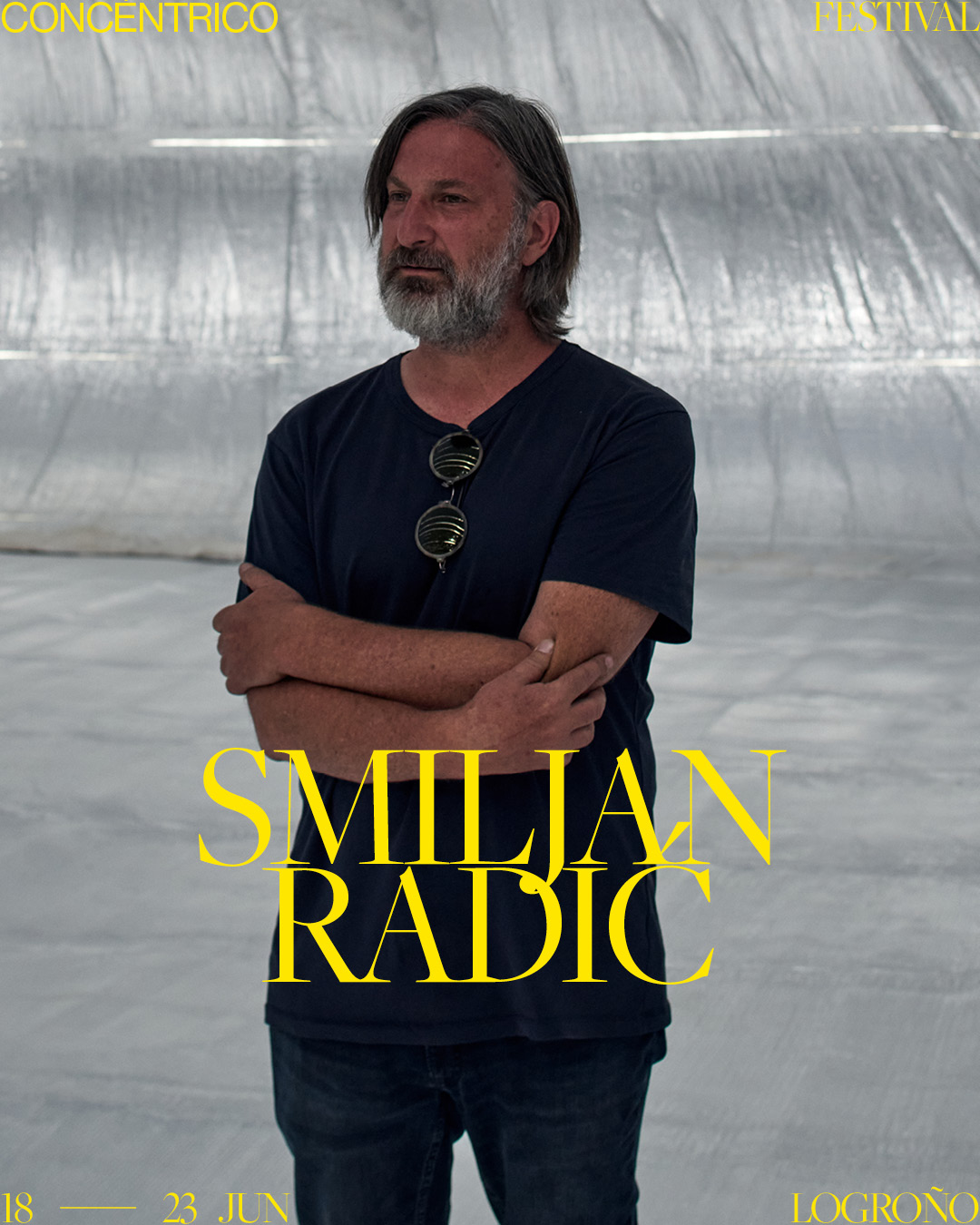
Smiljan Radić
Smiljan Radić Clarke (Santiago de Chile, 1965) is an architect from the Pontificia Universidad Católica de Chile and furthered his training at the Istituto Universitario di Architettura di Venezia. After several years of travel, he founded his studio in Chile in 1995. Throughout his career he has received numerous international honours, including the Design Vanguard Award, the Arnold W. Brunner Memorial Prize and the Attolini Medal, as well as distinctions from the Chilean Association of Architects, the AIA and the Croatian Academy of Sciences and Arts. He currently chairs the Fundación de Arquitectura Frágil, dedicated to promoting research, experimentation and the dissemination of interdisciplinary architecture.