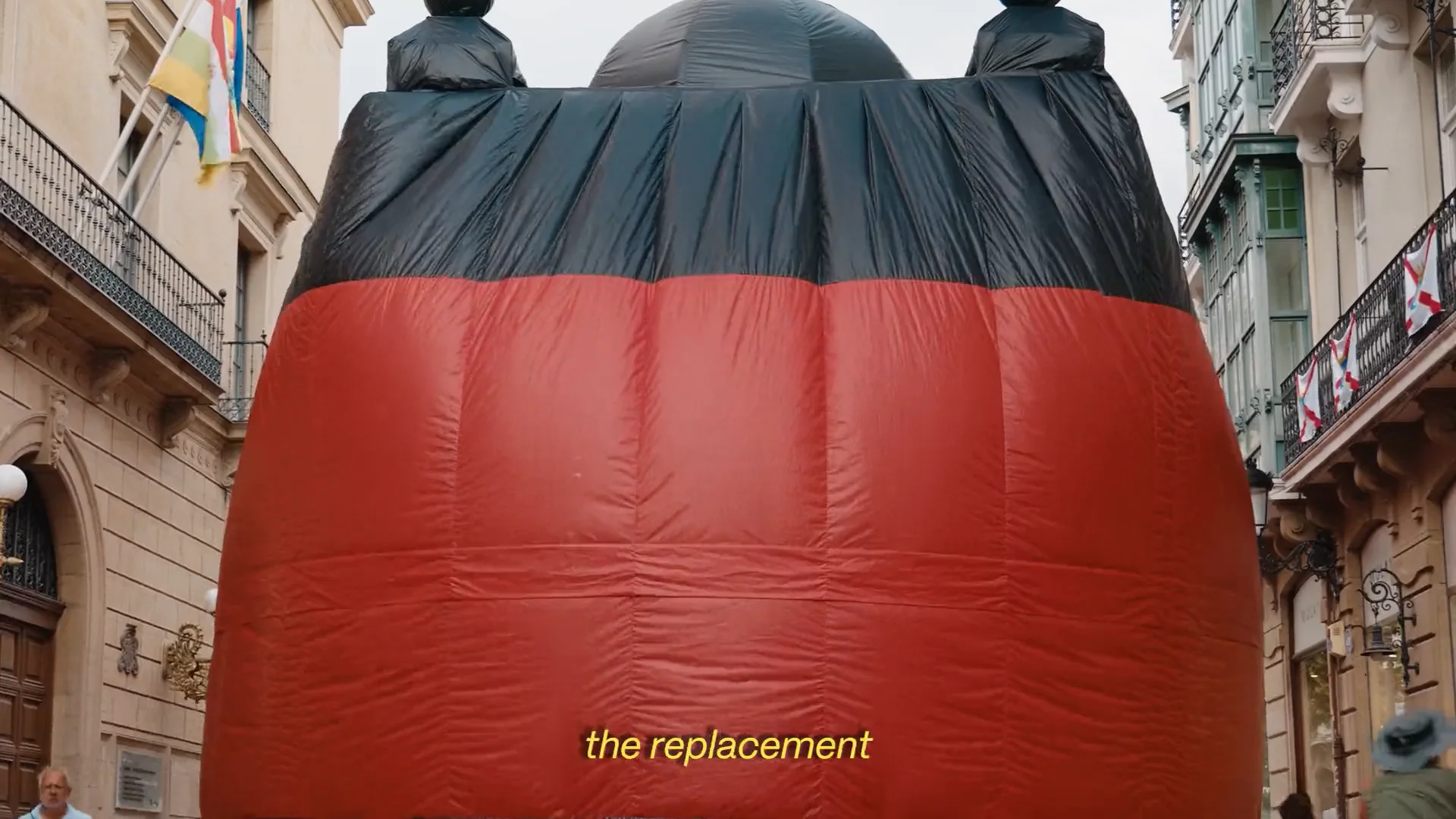
La Serrana de San Bernabé
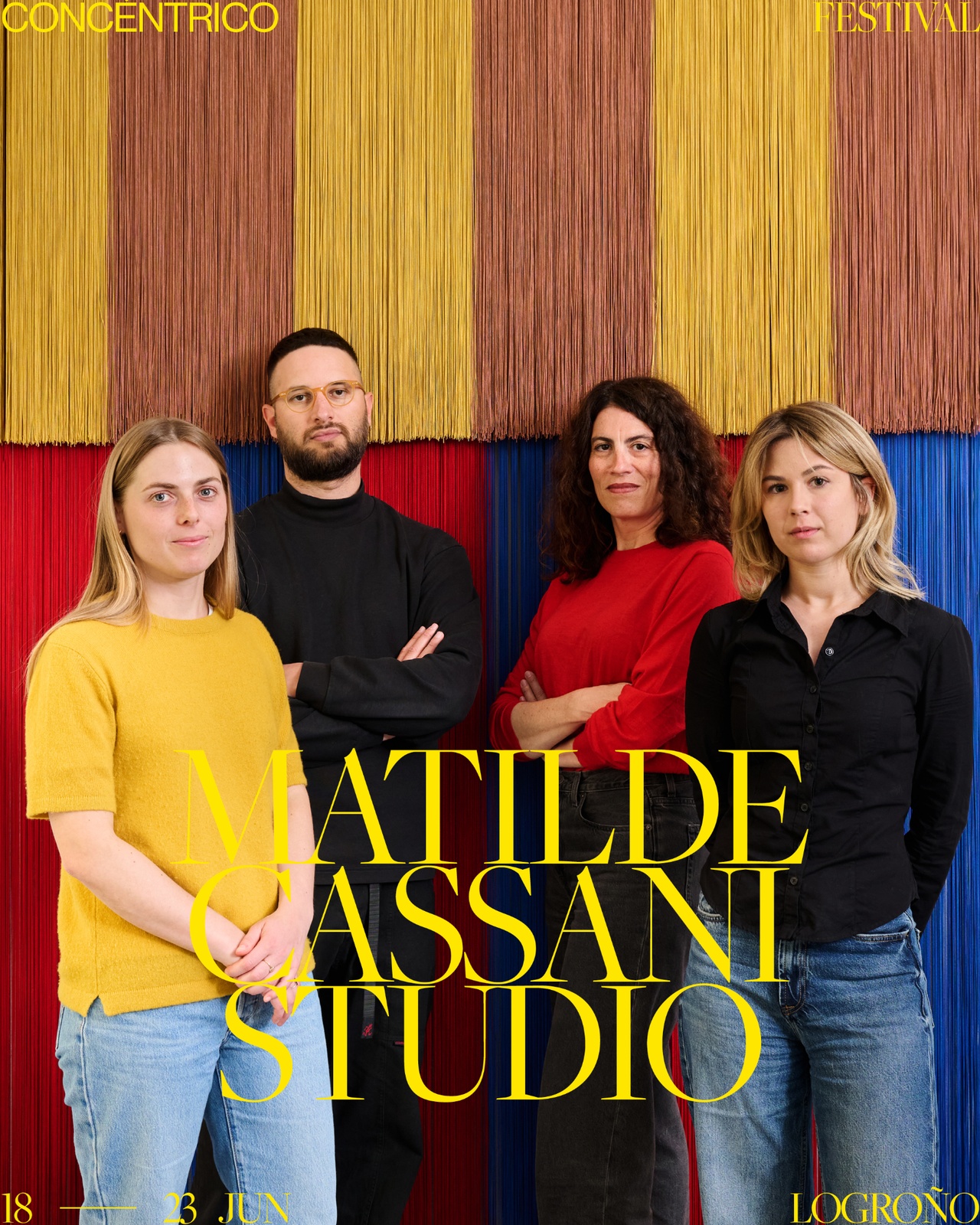
Matilde Cassani Studio
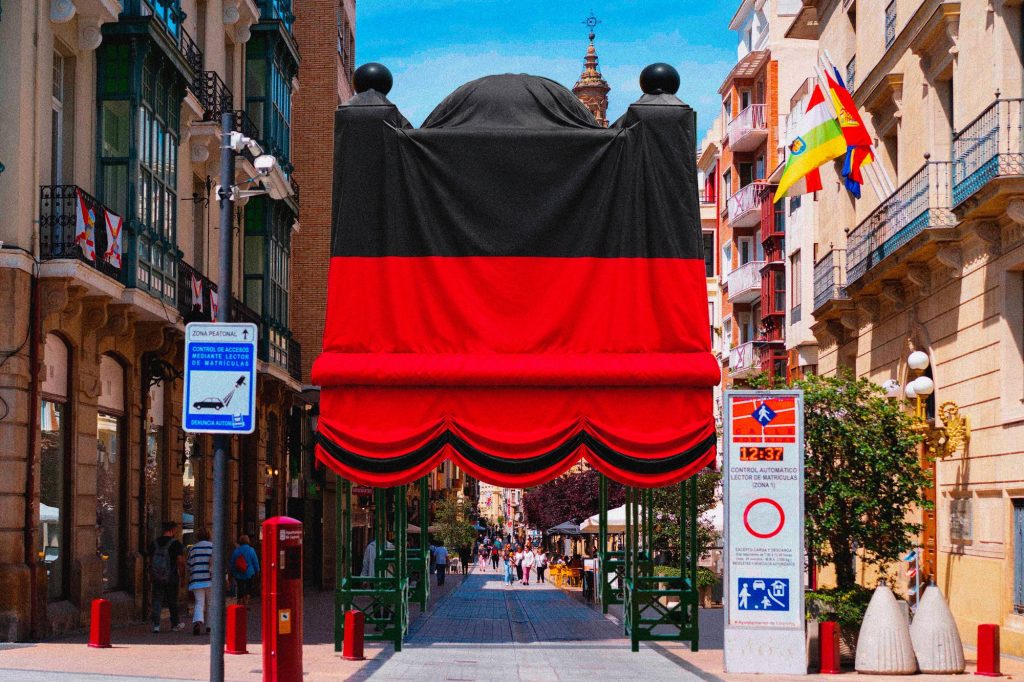
Arco de San Berbabé
2026
The celebratory character of local festivities becomes the source of inspiration for the twelfth edition of the Concéntrico Festival. The Arch of San Bernabé, which traditionally stands at the heart of Logroño as a symbolic gateway to the historic city during celebrations, is dressed in a new garment. Usually adorned with leaves, flags and coats of arms during the feast, the arch is now clothed in red to honour the new week of Concéntrico.
La Serrana de San Bernabé is a skirt tailored for the arch, inspired by the traditional red skirt with black ornaments worn by the dancers of La Roja. Just as the dancers spin and twirl, lifting and lowering their traditional skirts to create conical forms, the Serrana de San Bernabé is gathered and raised during the day, allowing the daily passage of citizens beneath it; at night, it is lowered and fully unfurled once again, transforming the arch into an urban ornament.
The intervention works with the festive as a way of activating public space: through textile and commemorative elements, tradition and contemporary use overlap upon a site closely tied to the celebration of 11 June and to the collective memory of Logroño, highlighting how popular celebrations build and renew, year after year, the identity of the city.


Matilde Cassani Studio
Matilde Cassani Studio is a practice operating at the boundary between architecture, installation and event design, with research focused on the spatial implications of cultural pluralism in the contemporary Western city. Its work has been exhibited in cultural institutions and galleries internationally and published in media such as Architectural Review, Domus and Abitare. Matilde Cassani has been a resident at Akademie Schloss Solitude and the Headlands Center for the Arts, and has taken part in several editions of the Venice Biennale. She currently combines her professional practice with teaching, after lecturing at various European institutions, and is a professor at the Freie Universität Bozen.
With the support of