
Architecture for Ritual
CENTRAL & Maxime Delvaux
Plaza del Mercado
2026
On the Plaza del Mercado, in front of the Co-Cathedral of Santa María de la Redonda, a sand dune is taking shape, bordered by a low perimeter wall that echoes the shape of Logroño’s ancient fortifications. For a week, the square is transformed into a playground —a sandy beach open to everyone.
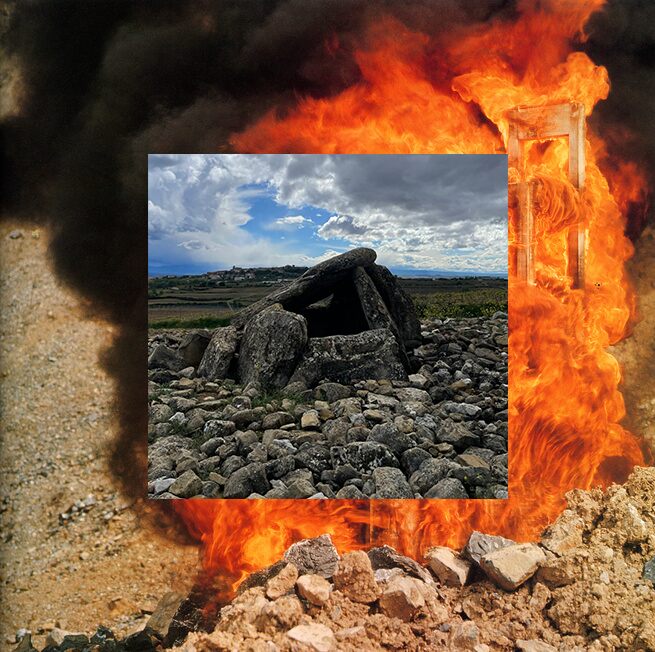
The proposal arises from the collaboration between CENTRAL and the photographer Maxime Delvaux, born of a joint investigation into the architecture and built environment of the city. Working from a typological observation of the local context, the project sets out a device conceived at once as an architectural structure and as a stage for the gaze and for collective gathering.
Day by day, the central mast is gradually revealed, displaying the colours of Logroño. Made of wooden planks, it allows small pieces of paper bearing intentions to be slipped into it, awaiting the moment when they will be burned. On St John’s Day, a large carpet of sand covers and protects the square; the mast then becomes, like a chimney, the base of the fire.
Architecture for Ritual thus understands public space as ritual and celebration: an ephemeral architecture that does not merely occupy the plaza but activates it as a place of encounter, play and shared memory, binding the tradition of St John’s Eve to a collective, festive experience of the city centre.


CENTRAL & Maxime Delvaux
CENTRAL & Maxime Delvaux brings together the architectural practice of CENTRAL office for architecture and urbanism —a Brussels-based studio founded in 2015 by Radim Louda, Paul Mouchet and Valentin Piret— and the photographic eye of Maxime Delvaux, who specialises in contemporary architecture. CENTRAL develops a systemic, multi-scalar approach to architecture, the city and the territory, combining practice, reflection, teaching and a presence at international biennials. Delvaux, also based in Brussels, works with studios and cultural institutions to represent architecture with clarity and sensibility, attentive to the relationship between space, context and use. Together they articulate a precise and critical reading of the built environment.
With the support of
