Zubía’s Laboratory
Zeppelin Design
Glorieta del Doctor Zubía
2026
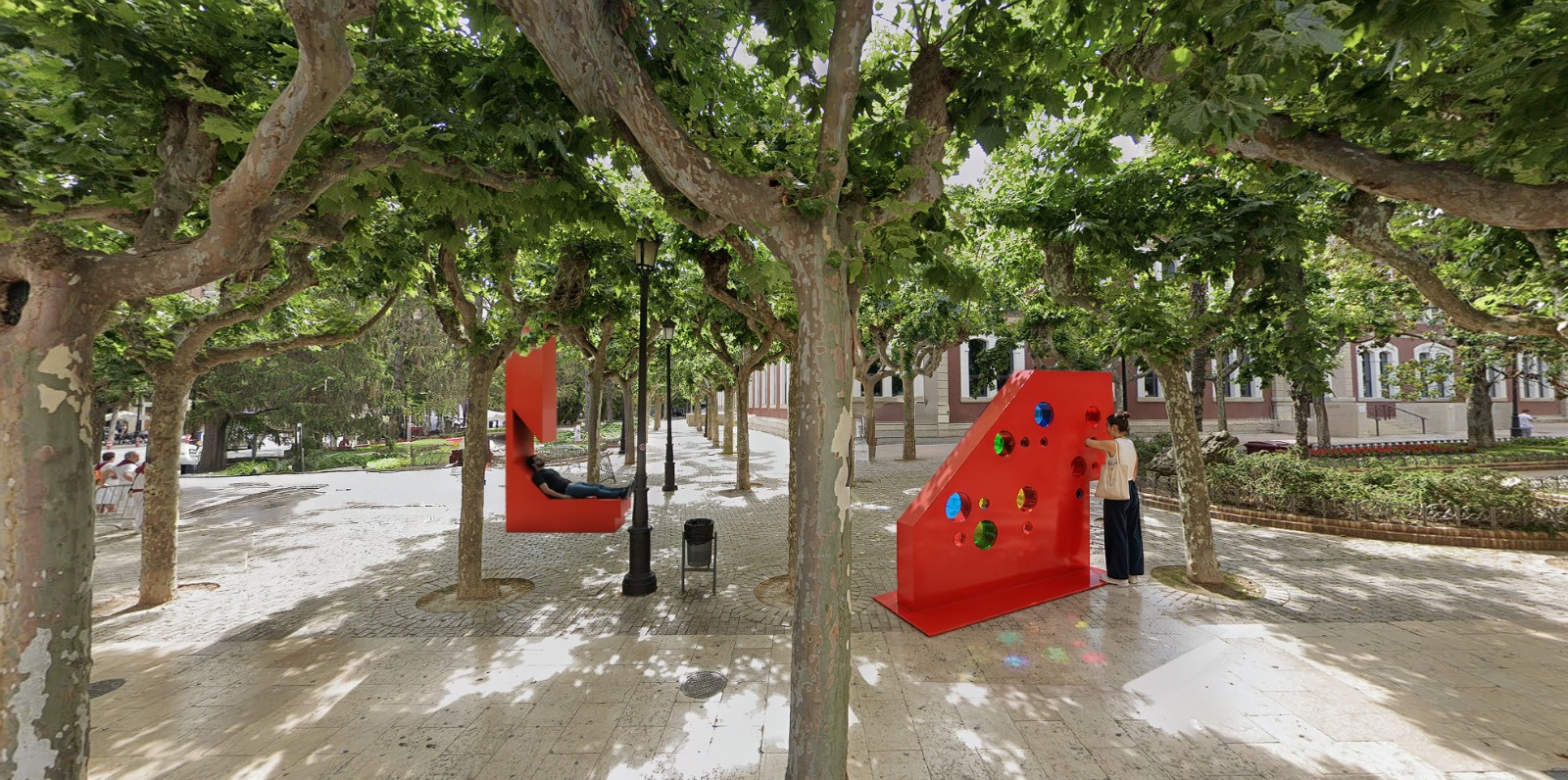
Zubía’s Laboratory transforms the Glorieta del Doctor Zubía, on the Bulevar del Espolón, into an open-air laboratory that connects the scientific legacy of Ildefonso Zubía with a contemporary device for observation. An enclave long perceived as a calm, contemplative haven —with its small fountains and the monument to the naturalist— is reimagined as a small open-air museum, a micro-observatory for looking, listening and playing.
The project pays tribute to Ildefonso Zubía Icazuriaga (1819–1891), a pharmacist, naturalist and educator in Logroño, later Professor of Natural History at the University of Oviedo, whose herbarium gathered some 4,300 specimens of algae, fungi, lichens, bryophytes and vascular plants from across northern Spain. That legacy is translated into a techno-poetic spatial instrument made up of two devices inspired by the observational tools and scientific imagery of the nineteenth century.
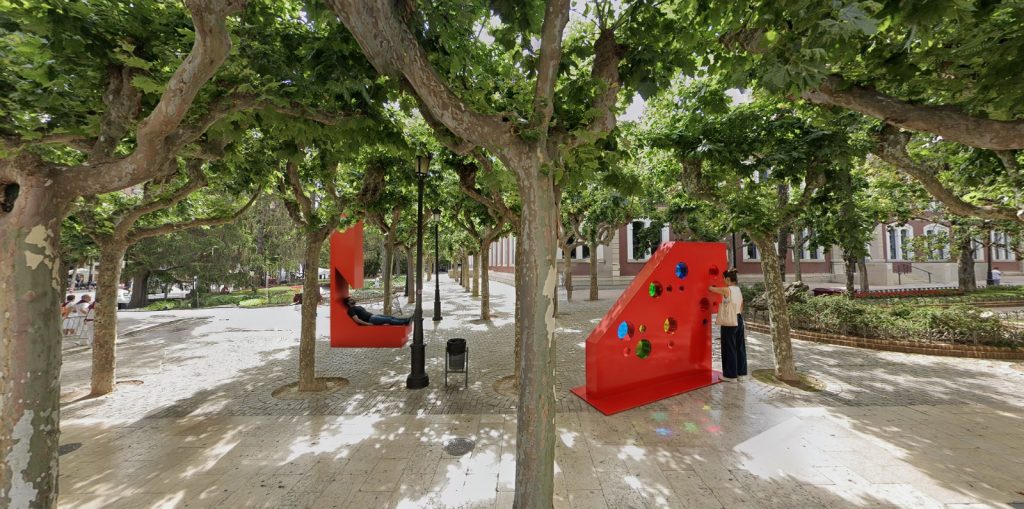
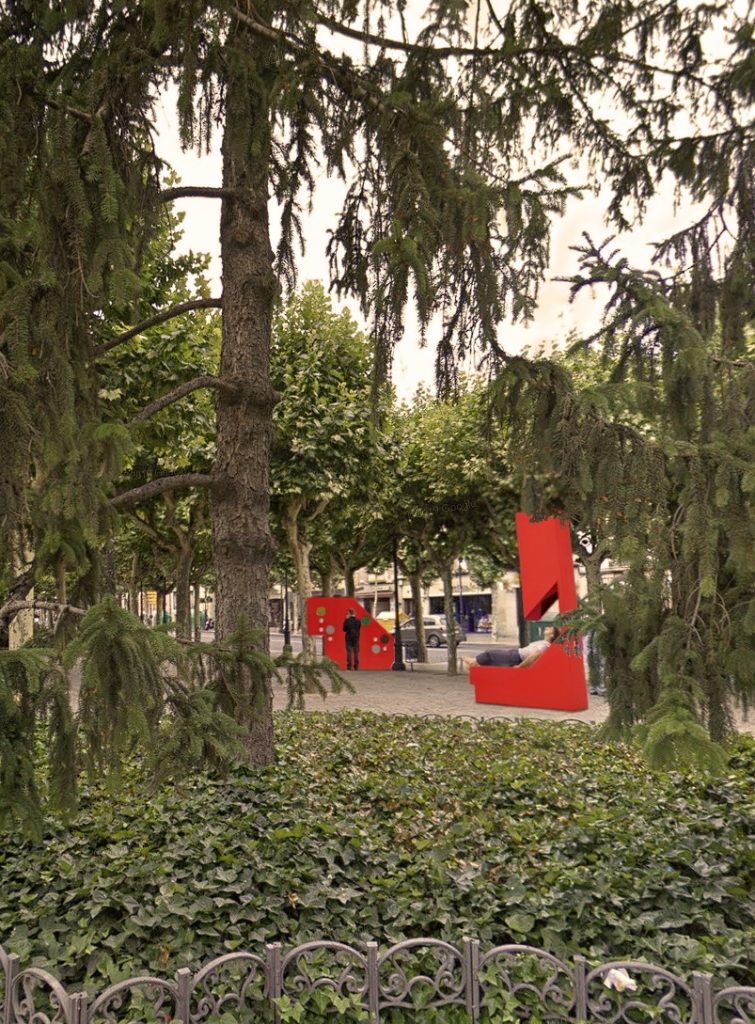
The first, a kaleidoscope, invites visitors to lie down and immerse themselves in a fragmented yet harmonious composition of sky and trees: its mirrored interior refracts the landscape into an ever-changing visual field, while its prismatic geometry acts as an acoustic funnel that captures and amplifies the sounds of the surroundings —leaves, water, distant voices— into an immersive auditory experience.
The second, a microscope, allows fragments of the environment to be observed in amplified detail through large circular lenses: insects, leaf structures, bark textures, acorns or clouds. Children and adults can collect small objects from the park —leaves, flowers, twigs, stones— and place them behind the lenses, turning them into subjects of study; when not in use, the lenses cast a subtle play of light across the ground.
Through simple yet evocative mechanisms, the installation proposes a shift in perception: from passing through space to actively investigating it. The ordinary becomes a field of discovery and observation a playful ritual that reconnects visitors with the living systems of the city, amplifying the presence of urban nature and prolonging the curious, persistent spirit that guided Zubía’s work.

Zeppelin Design
Zeppelin Design is an architecture and exhibition design studio that creates spaces for culture, knowledge and interaction. Its practice transforms complex narratives —about nature, science, history, literature, art, technology or the city— into participatory spatial experiences, through installations, exhibitions, site-specific interventions and performances. With a research-based approach centred on the active involvement of the visitor, the studio understands design as a tool for observation, discovery and dialogue. The team taking part in Concéntrico 2026 is formed by Cosmina Goagea, Constantin Goagea and Dinu Hoinărescu, whose careers combine architecture, curatorship, museographic design, film and visual storytelling.
With the support of
